

Generating website traffic is important, but traffic alone does not guarantee business growth. A website may attract hundreds of visitors every month without producing enough inquiries, phone calls, or sales. To achieve better results, businesses need to attract the right audience and guide potential customers toward taking action.
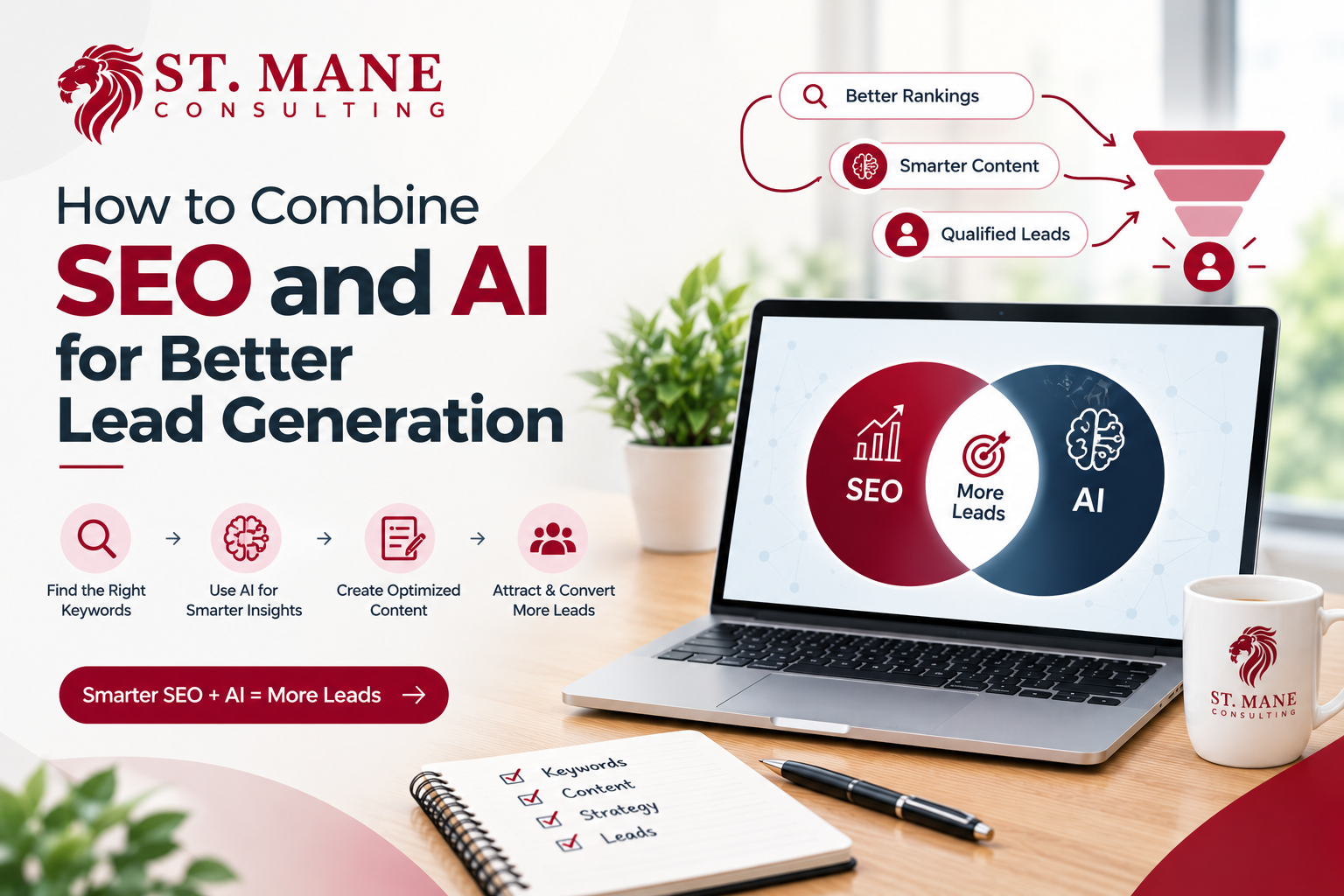
This is where combining Search Engine Optimization (SEO) with Artificial Intelligence (AI) can make a difference. SEO helps businesses improve their visibility in search results, while AI can help identify customer needs, analyze search intent, create relevant content, and improve the lead-generation process.
When these strategies work together, businesses can build a stronger online presence and attract more qualified prospects.
In this guide, we will explore how to combine SEO and AI for better lead generation, including practical strategies, useful AI prompts, and ways to turn website visitors into potential customers.
What Is the Role of SEO and AI in Lead Generation?
SEO helps your website appear when people search for products, services, or solutions related to your business. By targeting relevant keywords and creating useful content, you can attract visitors who are already interested in what you offer.
AI supports this process by helping you analyze information, discover content opportunities, understand customer behavior, and develop more relevant marketing strategies.
For example, a local business offering website design services can use SEO to target searches related to website designers in its area. AI can help identify customer concerns, suggest related keywords, and develop content that answers common questions before a prospect contacts the business.
The key is to use SEO to attract relevant traffic and AI to make your marketing efforts more focused and efficient.
1. Use AI to Find High-Intent Keywords
Keyword research is one of the most important steps in an SEO strategy. However, not every keyword attracts visitors who are ready to become customers.
Some people are looking for information, while others are comparing providers or actively searching for a service. Understanding this difference helps you create content that supports lead generation.
AI tools can help you organize keywords according to search intent and identify opportunities that align with your business goals.
For example, someone searching for “what is local SEO” may be researching the topic. Someone searching for “local SEO agency in Rochester” may be closer to hiring a service provider.
Focus on keywords that reflect commercial or transactional intent, especially for service pages.
Practical AI prompt:
“Act as an SEO strategist. My business provides digital marketing, local SEO, and web design services. Generate 20 keyword ideas that could attract potential customers. Group them by informational, commercial, and transactional search intent. Prioritize keywords that indicate a strong likelihood of hiring a service provider.”
Use the suggestions as a starting point, then validate them using keyword research tools. Check search volume, competition, relevance, and the actual search results before targeting them.
2. Create SEO Content That Answers Customer Questions
Content marketing helps businesses attract potential customers by addressing their questions and challenges. However, publishing articles without a clear purpose may generate traffic without producing meaningful leads.
AI can help you discover customer questions, develop content outlines, and identify topics that support your services.
Start by understanding the problems your ideal customers want to solve. For example, a business owner might search for ways to improve website traffic, increase online visibility, or generate more inquiries.
You can create blog posts around these concerns and naturally connect them to relevant service pages.
For example, a blog about improving local search visibility can link to your Local SEO Agency in Rochester service page. Readers who need professional assistance can then explore the service in more detail.
Practical AI prompt:
“My target audience consists of small business owners who want more website traffic and qualified leads. Suggest 10 SEO blog topics based on their common marketing challenges. For each topic, explain the customer’s search intent, the problem the article should solve, and the relevant service page it could link to.”
Use AI-generated ideas to guide your content planning, but make sure each article includes original insights, practical advice, and accurate information. AI should support content creation rather than replace genuine expertise.
3. Optimize Service Pages for Conversions
Getting visitors to your website is only the first step. Your service pages must also explain what you offer, why customers should choose you, and how they can take the next step.
AI can help review service-page content and identify areas that may need improvement. It can suggest clearer headlines, stronger calls to action, more relevant benefits, and answers to common customer objections.
For example, a web design service page should clearly explain the services offered, the benefits of professional website design, and how visitors can request a consultation.
Businesses looking for website design services can explore the Web Design Agency in Rochester page to understand the available service.
Consider improving these elements on your service pages:
- Headlines: Explain the main service and the value it provides.
- Service descriptions: Focus on customer needs and business outcomes.
- Calls to action: Encourage visitors to call, request a quote, or schedule a consultation.
- Trust signals: Include genuine testimonials, relevant experience, case studies, and examples of previous work.
- Frequently asked questions: Address pricing concerns, timelines, deliverables, and other common questions.
Practical AI prompt:
“Review the following service-page content for lead-generation opportunities. Identify unclear messaging, missing customer benefits, weak calls to action, and unanswered customer questions. Suggest improvements that make the page more persuasive without making unsupported claims or keyword stuffing. Here is my content: [paste service-page content].”
After making changes, monitor conversions and user behavior to determine whether the improvements are working.
4. Use AI to Improve Local SEO
Local SEO helps businesses reach potential customers searching for services in a specific geographic area. It is particularly valuable for businesses that serve particular cities or regions.
AI can support local SEO by identifying location-specific keyword opportunities, suggesting relevant content topics, and organizing customer questions into useful content plans.
For example, a digital marketing agency serving Rochester, New York, might target searches related to local SEO, website design, and digital marketing services in Rochester.
You can use AI to develop ideas for service-area pages, local landing pages, and blog posts that address the needs of customers in your target market.
However, each location page should provide meaningful local information. Avoid creating multiple nearly identical pages that simply replace one city name with another.
Other important local SEO activities include maintaining accurate business information, selecting relevant Google Business Profile categories, gathering genuine customer reviews, and ensuring that your website works well on mobile devices.
Practical AI prompt:
“I run a digital marketing agency serving Rochester, NY. Suggest 15 local SEO content opportunities that address the needs of businesses in this area. Include service-related keyword ideas, local blog topics, customer questions, and opportunities to improve my existing location-specific pages. Avoid repetitive topics and explain the search intent behind each suggestion.”
Use AI to discover opportunities, then verify the suggestions against your services, audience, and local market.
5. Improve Content Quality and Search Intent With AI
Search intent describes what someone wants to accomplish when entering a query into a search engine. If your content does not satisfy that intent, it may struggle to attract relevant visitors or convert them into leads.
AI can help compare the purpose of a keyword with the content on your page.
For example, someone searching for “best website design practices” may want educational information. Someone searching for “hire a web design agency” is more likely to be evaluating service providers.
These searches require different types of content.
Use AI to identify gaps in your articles, suggest useful subtopics, and make complicated explanations easier to understand. You can also use it to create FAQs that address genuine customer concerns.
Practical AI prompt:
“Analyze the search intent behind the keyword [insert keyword]. Explain what the searcher is likely trying to achieve, what information they expect to find, and which content format would best satisfy their needs. Suggest improvements to help my page answer the query clearly and guide relevant visitors toward an appropriate next step.”
Always review AI suggestions before publishing. Content should be accurate, useful, and written for people rather than created solely to include keywords.
6. Personalize Calls to Action for Different Visitors
Not every website visitor is ready to contact your business immediately. Some visitors are learning about a problem, while others are comparing solutions or looking for a provider.
Your calls to action should reflect these differences.
For example:
- An educational blog post can encourage readers to explore a related guide.
- A service comparison article can direct readers to a relevant service page.
- A service page can encourage visitors to request a quote or consultation.
- A contact page can make it easy to submit an inquiry or call your business.
AI can help you develop different calls to action based on the purpose of each page.
Practical AI prompt:
“Suggest five calls to action for a digital marketing agency website. Create options for visitors who are researching SEO, comparing marketing agencies, and ready to request services. Keep each CTA clear, specific, and relevant to the visitor’s stage in the buying process.”
Test different calls to action to see which ones generate more meaningful engagement and qualified inquiries.
7. Use AI to Analyze SEO Performance and Identify Opportunities
SEO performance data can reveal which pages attract visitors, which keywords generate impressions, and where potential customers may be losing interest.
AI can help summarize this information and highlight patterns that deserve further investigation.
For example, a page receiving many impressions but few clicks may need a more compelling title tag or meta description. A page receiving organic traffic but generating few inquiries may need clearer service information, stronger calls to action, or a more relevant visitor experience.
Useful data sources include Google Search Console, Google Analytics, and your lead-tracking system.
Practical AI prompt:
“Analyze the following SEO performance data. Identify pages with high impressions but low click-through rates, pages receiving traffic without conversions, and keywords with potential to attract qualified leads. Recommend specific improvements to titles, meta descriptions, page content, internal links, and calls to action. Distinguish between confirmed findings and possible explanations. Here is my data: [paste relevant data].”
AI-generated analysis should guide your investigation, not replace it. Review the underlying data before making significant changes, and avoid assuming that every low-converting page has the same problem.
8. Build a Strong Internal Linking Strategy
Internal links connect related pages on your website and help visitors discover additional information. They also help search engines understand the relationship between different pages.
A well-planned internal linking strategy can support both SEO and lead generation by connecting educational content with relevant services.
For example, a blog post about improving website performance could link to your web design service page. An article about local search visibility could link to your local SEO service page.
Use descriptive anchor text that explains what readers will find after clicking.
AI can help identify linking opportunities across your existing content, but you should verify every suggested destination and ensure the link makes sense in context.
Practical AI prompt:
“Review the following blog topic and suggest relevant internal links for a digital marketing agency website. Prioritize service pages and closely related articles. For each suggested link, provide natural anchor text and explain how it helps readers. Do not invent URLs. Blog topic: [insert topic]. Available pages: [paste your page titles and URLs].”
Review your blog archive regularly to identify older articles that could link to newer, relevant service pages.
9. Measure Qualified Leads, Not Just Website Traffic
The ultimate goal of combining SEO and AI is not simply to increase the number of visitors. It is to attract people who are more likely to become customers.
Track metrics that connect search visibility to business outcomes, including:
- Organic search traffic to important landing pages.
- Click-through rates from search results.
- Contact form submissions and phone calls.
- Conversion rates on service pages.
- Qualified leads generated through organic search.
- Sales opportunities and customers attributed to SEO.
Where possible, connect website analytics with your customer relationship management (CRM) system to understand which pages and search campaigns contribute to qualified inquiries.
For example, a blog post generating fewer visits but several relevant inquiries may provide more business value than an article attracting large amounts of unrelated traffic.
Use these insights to refine your keyword targeting, content strategy, and conversion paths.
Common Mistakes to Avoid When Combining SEO and AI
Although AI can make SEO workflows more efficient, using it without a clear strategy can limit your results.
Avoid these common mistakes:
Publishing unedited AI content: Review facts, improve the writing, and add genuine expertise before publishing.
Targeting irrelevant keywords: High search volume does not automatically mean a keyword will attract potential customers.
Ignoring conversion optimization: A well-ranked page may still generate few leads if its message and calls to action are unclear.
Overusing keywords: Write naturally and prioritize the needs of your audience.
Creating duplicate content: Give every page a distinct purpose instead of publishing multiple articles covering essentially the same topic.
Ignoring performance data: Review results regularly and adjust your strategy based on evidence rather than assumptions.
AI works best when it supports informed decisions, practical experience, and a well-defined SEO strategy.
Final Thoughts
Combining SEO and AI can help businesses create more focused content, identify valuable keyword opportunities, improve service pages, and understand what potential customers need.
The most effective approach begins with a clear goal: attract the right audience, provide useful information, and make it easy for interested visitors to contact your business.
Start by identifying high-intent keywords, improving your most important service pages, adding relevant internal links, and using AI to analyze performance data. Then measure qualified inquiries and conversions to determine which activities produce the strongest results.
If your business wants to improve search visibility and attract more potential customers, investing in a structured SEO strategy is a practical starting point. With the right combination of useful content, technical optimization, AI-assisted research, and conversion-focused website improvements, you can build a stronger foundation for sustainable lead generation
