

Your website is often the first interaction potential customers have with your business. Before contacting you, requesting a quote, or purchasing a service, visitors usually explore your website to understand what you offer and whether your business is trustworthy.
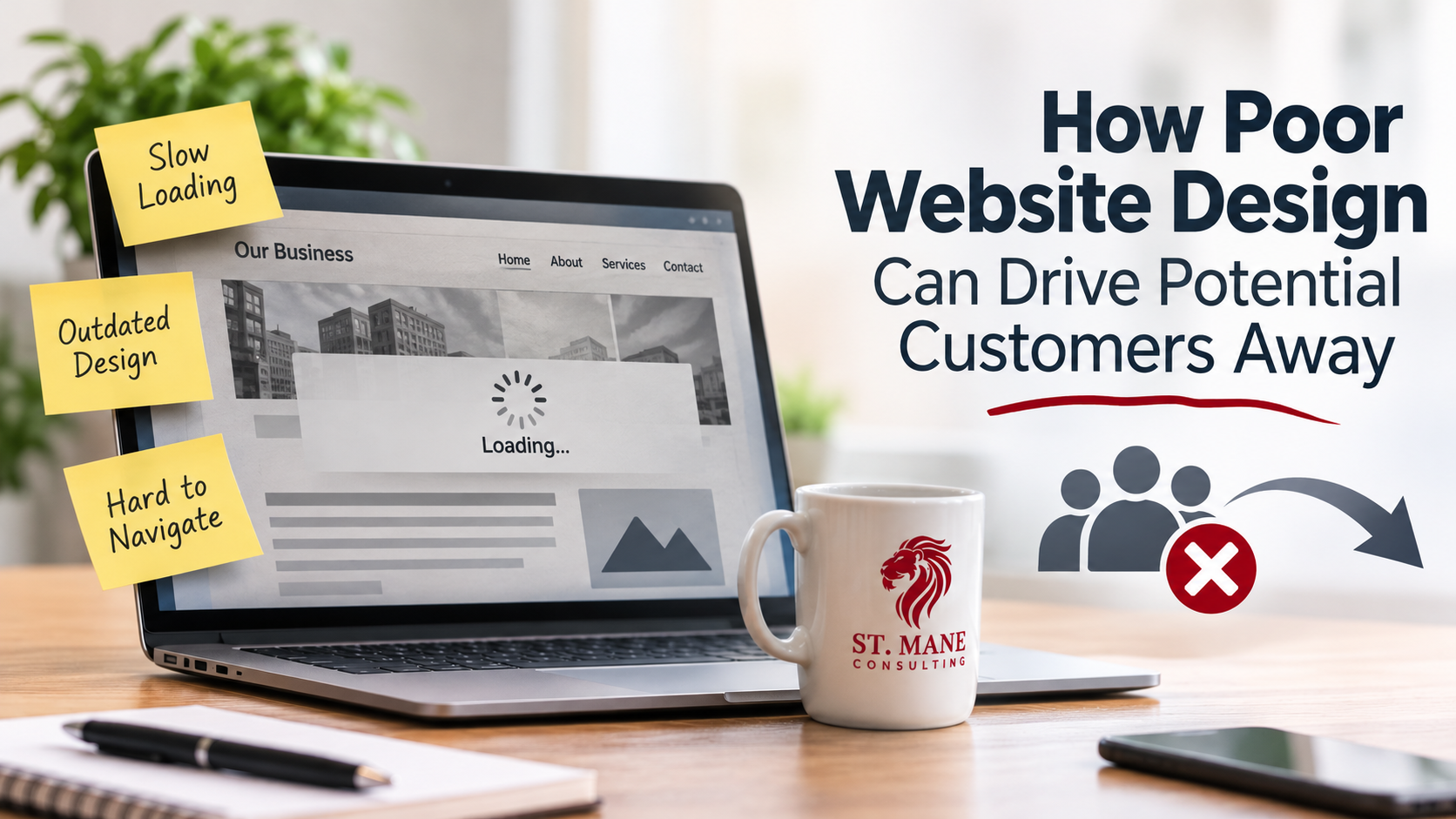
But what happens when your website looks outdated, loads slowly, or makes it difficult for visitors to find information?
Instead of becoming customers, visitors may leave your website and choose a competitor with a better online experience.
Poor website design can affect more than appearance. It can reduce customer trust, create navigation problems, hurt user experience, and prevent your business from generating valuable leads.
In this guide, we will explore how poor website design drives potential customers away, the common mistakes businesses should avoid, and how improving your website can help turn visitors into customers.
Why Website Design Matters for Business Growth
A professional website does more than display your business information. It helps communicate your brand, explain your services, build credibility, and guide visitors toward taking action.
When someone visits your website, they should quickly understand:
- What your business offers.
- Who your services are designed for.
- Why they should choose your business.
- How they can contact you.
If visitors struggle to find this information, they may lose interest and leave.
A well-designed website creates a smooth experience that encourages visitors to explore your services and take the next step. For businesses competing online, website design is an important part of building trust and generating leads.
8 Ways Poor Website Design Can Drive Potential Customers Away
Several website design problems can negatively affect how visitors interact with your business. Here are eight common issues that may be costing you potential customers.
1. Outdated Website Design Creates a Poor First Impression
First impressions matter when someone visits your website for the first time.
An outdated website with old graphics, inconsistent colors, cluttered layouts, or difficult-to-read text may make your business appear less professional.
Even if your business provides excellent services, visitors may question its credibility when the website does not reflect the quality of your work.
How to improve it:
- Use a clean and modern website layout.
- Maintain consistent branding and colors.
- Choose professional images.
- Use readable fonts and appropriate spacing.
- Keep your design consistent across all pages.
Your website should reflect your current business identity and create a positive impression from the moment someone arrives.
2. Slow Loading Speed Makes Visitors Leave
Website speed plays an important role in user experience. Visitors expect pages to load quickly, especially when browsing on mobile devices.
If your website takes too long to load, potential customers may leave before viewing your services or contacting your business.
Slow loading can also affect important page experience metrics and make your website less effective at converting visitors.
How to improve it:
- Compress large images.
- Use modern image formats such as WebP.
- Choose reliable website hosting.
- Reduce unnecessary plugins.
- Minimize unused scripts and code.
- Enable browser caching.
Use Google PageSpeed Insights to identify performance problems and find opportunities to improve your website speed.
3. Complicated Navigation Confuses Visitors
Visitors should not have to spend several minutes searching for basic information.
If your navigation menu contains too many options, unclear labels, or poorly organized pages, users may struggle to find the information they need.
For example, someone looking for your pricing, service details, or contact information should be able to locate these pages without unnecessary effort.
How to improve it:
- Keep the navigation menu simple.
- Organize services into relevant categories.
- Use clear menu labels.
- Add visible contact information.
- Include links to important service pages.
- Avoid unnecessary menu items.
A simple navigation structure helps visitors explore your website and discover the services your business provides.
4. Poor Mobile Experience Can Cost You Customers
Many potential customers browse websites using smartphones and tablets. If your website is not optimized for smaller screens, visitors may experience difficulty reading content, clicking buttons, or completing contact forms.
Common mobile design problems include:
- Text that is too small.
- Buttons placed too close together.
- Images extending beyond the screen.
- Menus that do not work properly.
- Contact forms that are difficult to complete.
A responsive website adjusts its layout to different screen sizes, providing a consistent experience across devices.
Make sure your website is easy to navigate, readable, and functional on mobile devices.
5. Weak Calls to Action Reduce Conversions
A visitor may be interested in your services but still leave without contacting you if they do not know what to do next.
This often happens when websites lack clear calls to action (CTAs).
For example, a service page may explain everything about your business but fail to include a visible button encouraging visitors to request a consultation or receive a quote.
Effective CTA examples include:
- Request a Free Consultation
- Get a Free Quote
- Contact Our Team
- Schedule a Consultation
- Explore Our Services
Place relevant CTAs throughout your website, especially on service pages and landing pages.
Make sure each button leads visitors to the appropriate destination.
6. Too Much Content Makes Your Website Difficult to Read
Providing useful information is important, but overwhelming visitors with large blocks of text can make your website difficult to understand.
People generally scan website content before deciding which sections they want to read in detail.
If your pages contain long paragraphs, unnecessary information, and poorly organized headings, visitors may struggle to find important details.
How to improve readability:
- Use short paragraphs.
- Divide content into meaningful sections.
- Add descriptive headings.
- Use bullet points where appropriate.
- Highlight important information.
- Include relevant images and visual elements.
Your website content should answer customer questions clearly without making visitors work too hard to understand your services.
7. Lack of Trust Signals Makes Customers Hesitate
Before choosing a business, potential customers often look for signs that they can trust the company.
If your website does not provide enough information about your business, experience, or customer satisfaction, visitors may hesitate to contact you.
Important trust-building elements include:
- Genuine customer reviews and testimonials.
- Clear business contact information.
- Professional service descriptions.
- Relevant project examples or case studies.
- Secure website connections through HTTPS.
- Information about your company and team.
Adding these elements helps visitors understand your business and feel more confident about taking the next step.
8. Broken Links and Website Errors Damage User Experience
Imagine a potential customer clicking a service link only to encounter a 404 error or an incomplete page.
This creates frustration and may cause visitors to leave your website.
Broken links, missing images, outdated information, and malfunctioning forms can make your business appear unreliable.
How to improve it:
- Check internal links regularly.
- Fix broken URLs.
- Test contact forms.
- Update outdated information.
- Remove unnecessary redirects.
- Check important pages after website updates.
Regular website maintenance helps keep your website functional and provides visitors with a smoother experience.
How Better Website Design Helps Generate More Business Leads
Improving your website design can create opportunities to attract visitors, build trust, and encourage more inquiries.
Here are some ways a professionally designed website supports business growth.
1. Builds Brand Credibility
A modern, consistent design helps communicate professionalism and makes your business appear more trustworthy.
2. Improves User Experience
Simple navigation, readable content, and responsive layouts make it easier for visitors to explore your services.
3. Encourages Customer Inquiries
Strategically placed calls to action, visible contact details, and simple forms make it easier for visitors to reach your business.
4. Supports SEO Performance
A technically sound, mobile-friendly website with a clear structure can support your SEO efforts and improve how search engines understand your content.
5. Helps You Stand Out From Competitors
A professional website can highlight your unique services, experience, and value, helping potential customers understand why they should choose your business.
Does Website Design Affect SEO?
Yes. Website design and SEO work together to improve your online presence.
Although attractive visuals alone do not guarantee higher Google rankings, the way your website is structured and developed can influence search performance.
Important website design elements that support SEO include:
- Mobile-friendly layouts.
- Fast-loading pages.
- Clear website navigation.
- Proper heading structures.
- Descriptive image alt text.
- Search engine-friendly URLs.
- Logical internal linking.
- Accessible and useful content.
A well-structured website helps visitors navigate your pages while making it easier for search engines to discover and understand your content.
When Should You Consider Redesigning Your Business Website?
Not every website problem requires a complete redesign. Sometimes, improving speed, navigation, or individual landing pages may be enough.
However, a website redesign may be worth considering if:
- Your website looks outdated compared with competitors.
- Your website does not work properly on mobile devices.
- Visitors struggle to find important information.
- Your website receives traffic but generates very few inquiries.
- Your existing design no longer represents your brand.
- Your website is difficult to update or maintain.
- Your business has introduced new services that are not properly presented.
Before redesigning your website, identify the problems you want to solve and define clear goals, such as improving user experience, increasing inquiries, or presenting your services more effectively.
Final Thoughts
Poor website design can quietly cost your business valuable opportunities. From outdated layouts and slow loading speeds to confusing navigation and weak calls to action, small design problems can prevent potential customers from trusting your business or contacting you.
A professional website should do more than look attractive. It should communicate your value, provide a smooth browsing experience, support your SEO strategy, and make it easy for visitors to become customers.
At ST Mane Consulting, we help businesses strengthen their online presence through professional web design, SEO, local SEO, and digital marketing solutions.
Whether your website needs a complete redesign or improvements to its existing structure, the right approach can help create a better experience for visitors and support your business growth.
Ready to improve your website and attract more customers? Explore ST Mane Consulting and discover how professional digital marketing and web design solutions can help your business grow.
