

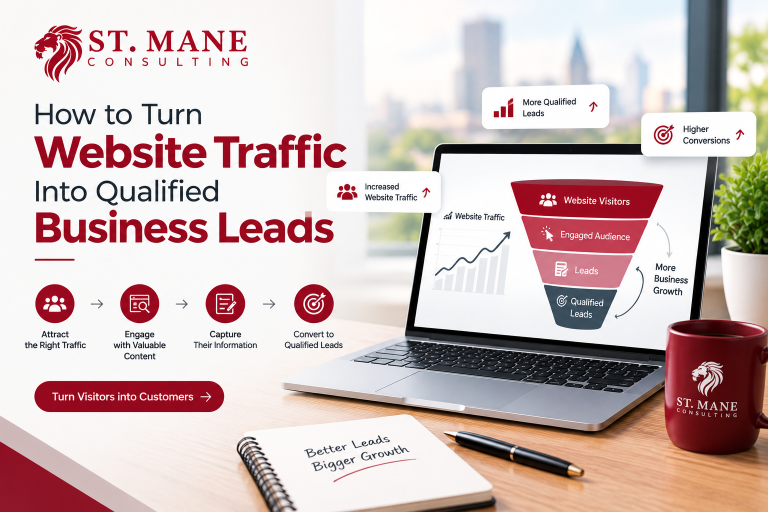
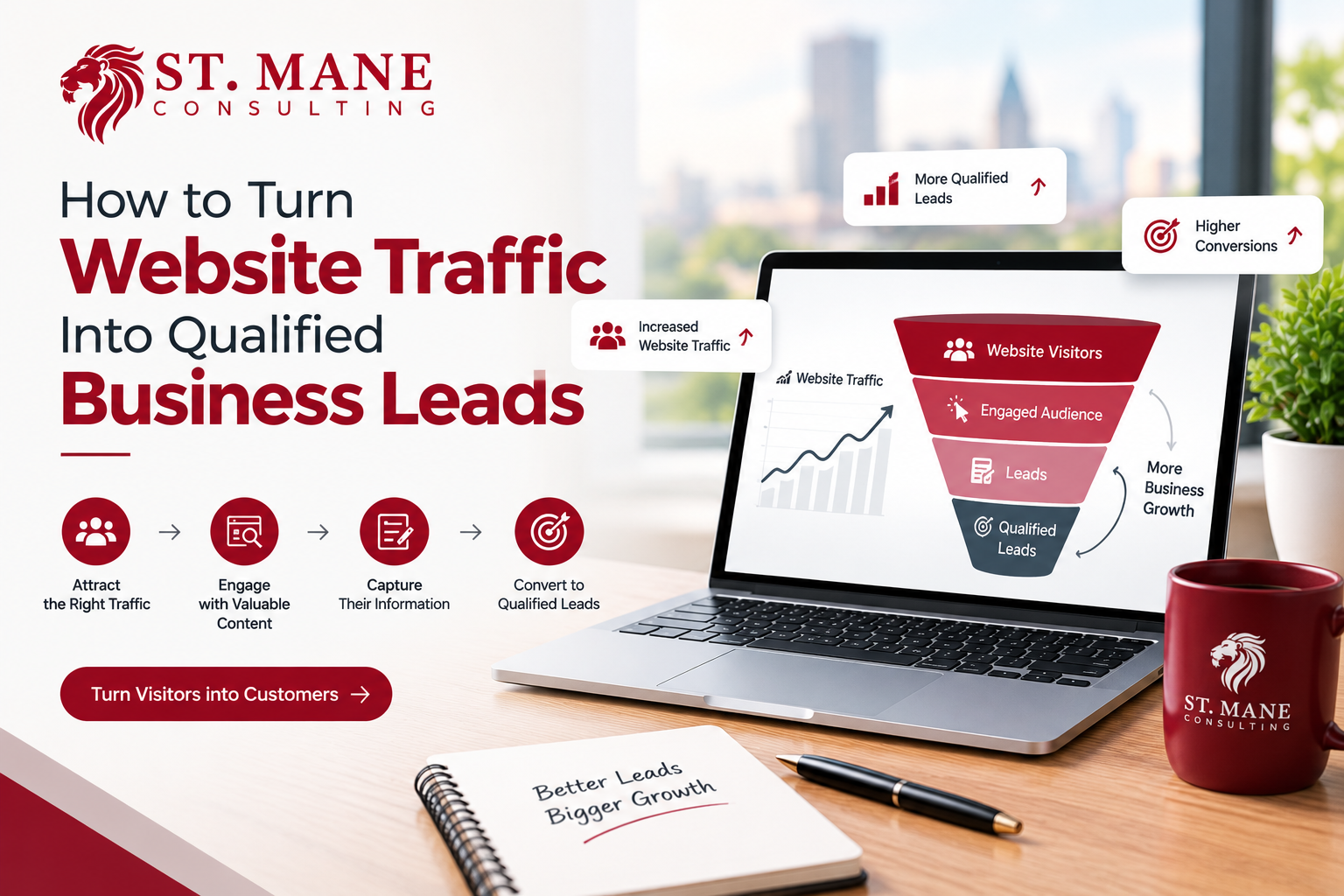
Getting visitors to your website is important, but traffic alone does not guarantee business growth. Many businesses invest in SEO, paid advertising, and content marketing but struggle to convert visitors into potential customers.
The key is to attract the right audience, build trust, and guide visitors toward taking action. With the right strategy, your website can become an effective tool for generating qualified leads.
Why Is Website Traffic Not Converting Into Leads?
Low lead generation can happen for several reasons. Your website may attract visitors who are not interested in your services, lack clear calls to action, or fail to communicate the value of your offerings.
Common reasons include:
- Targeting the wrong keywords or audience.
- Slow-loading pages and poor mobile experiences.
- Complicated contact forms.
- Unclear service descriptions.
- Limited trust signals or customer reviews.
- Missing or ineffective calls to action.
Identifying these issues is the first step toward improving conversions and generating more valuable business inquiries.
1. Attract the Right Audience Through SEO
SEO helps your website reach people actively searching for your services. Focus on keywords that reflect your audience’s needs and purchasing intent.
How to improve results:
- Target relevant service-related keywords.
- Create content that answers customer questions.
- Optimize service pages and website content.
- Improve website speed and mobile usability.
A focused SEO strategy helps attract visitors who are more likely to become customers.
2. Create Landing Pages That Convert
Landing pages should clearly explain your services and encourage visitors to take the next step. Direct visitors to pages that match their search intent instead of sending everyone to your homepage.
An effective landing page includes:
- A clear, benefit-focused headline.
- A concise service description.
- Genuine testimonials or trust signals.
- A prominent call to action.
- A simple contact form.
Professional web design services can help create a website that delivers a better user experience and encourages conversions.
3. Use Clear Calls to Action
Visitors need to know what to do next. Clear calls to action encourage them to contact your business, request a quote, or schedule a consultation.
Examples include:
- Request a Consultation
- Get a Custom Quote
- Contact Our Team
- Discuss Your Project
Place relevant CTAs throughout your service pages and blog posts. Keep the wording simple and make the next step easy to complete.
4. Optimize Your Website for Conversions
Conversion rate optimization helps turn more visitors into leads by improving their website experience.
Focus on these improvements:
- Simplify contact forms.
- Improve page loading speed.
- Make navigation easy to understand.
- Display genuine reviews and testimonials.
- Ensure your website works well on mobile devices.
Review visitor behavior regularly to identify areas that need improvement.
5. Create Valuable Content
Helpful content attracts potential customers and establishes your business as a useful source of information.
Publish blog posts that address common customer questions, explain industry challenges, and offer practical solutions.
For better results:
- Research relevant keywords.
- Answer specific customer questions.
- Link blog posts to related service pages.
- Include relevant calls to action.
For example, articles about local search visibility can naturally link to your Local SEO services.
6. Offer Useful Lead Magnets
A lead magnet encourages visitors to share their contact details in exchange for a valuable resource.
Examples include:
- SEO checklists.
- Website audit guides.
- Digital marketing templates.
- Business growth resources.
Choose resources that address your audience’s needs and provide a useful next step toward your services.
7. Build Trust With Social Proof
Potential customers are more likely to contact a business when they trust its expertise and credibility.
Strengthen trust by adding:
- Genuine customer testimonials.
- Authentic online reviews.
- Relevant project examples.
- Case studies with verifiable results.
- Clear business and contact information.
Use accurate information and avoid unsupported claims about your services or results.
8. Improve Local Search Visibility
Local SEO helps businesses reach customers searching for services in specific locations.
To improve local visibility:
- Optimize your Google Business Profile.
- Keep business information accurate.
- Encourage genuine customer reviews.
- Create useful location-specific content.
- Maintain consistent business details across directories.
Effective Local SEO can help your business connect with people looking for relevant services in your target area.
9. Track Website Performance
Analytics tools help you understand where visitors come from and which pages generate leads.
Monitor key metrics such as:
- Traffic sources.
- Landing page performance.
- Contact form submissions.
- Phone calls and inquiries.
- Conversion rates.
- Lead quality.
Tools such as Google Analytics 4 and Google Search Console can help identify opportunities to improve your marketing strategy.
10. Nurture Potential Customers
Not every visitor is ready to purchase immediately. Lead nurturing helps maintain relationships with interested prospects until they are ready to take action.
You can nurture leads through:
- Helpful email newsletters.
- Educational content.
- Relevant case studies.
- Personalized follow-ups.
- Consultation invitations.
Keep your communication useful and relevant, and respect subscribers’ consent and preferences.
11. Focus on Lead Quality
More inquiries do not always mean better results. Qualified leads are prospects whose needs align with your services.
To identify suitable prospects, consider:
- Their business requirements.
- The services they need.
- Their budget and timeline.
- Their readiness to begin a project.
Use a simple contact form or initial consultation to understand their needs and recommend appropriate solutions.
12. Test and Improve Your Strategy
Regular testing helps identify what encourages visitors to become leads.
Consider experimenting with:
- Headlines and page content.
- CTA placement and wording.
- Contact form length.
- Page layouts.
- Testimonials and trust signals.
Monitor the results and prioritize changes that improve qualified inquiries rather than focusing only on traffic growth.
Conclusion
Turning website traffic into qualified business leads requires the right combination of SEO, useful content, conversion-focused web design, and trust-building strategies.
Start by identifying why visitors are not taking action, improve the pages that attract relevant traffic, and track your results. Consistent optimization can help your business generate better leads and make more effective use of its website.
Ready to generate more qualified leads from your website? Explore St. Mane Consulting to learn how strategic digital marketing and web design services can support your business growth.
